
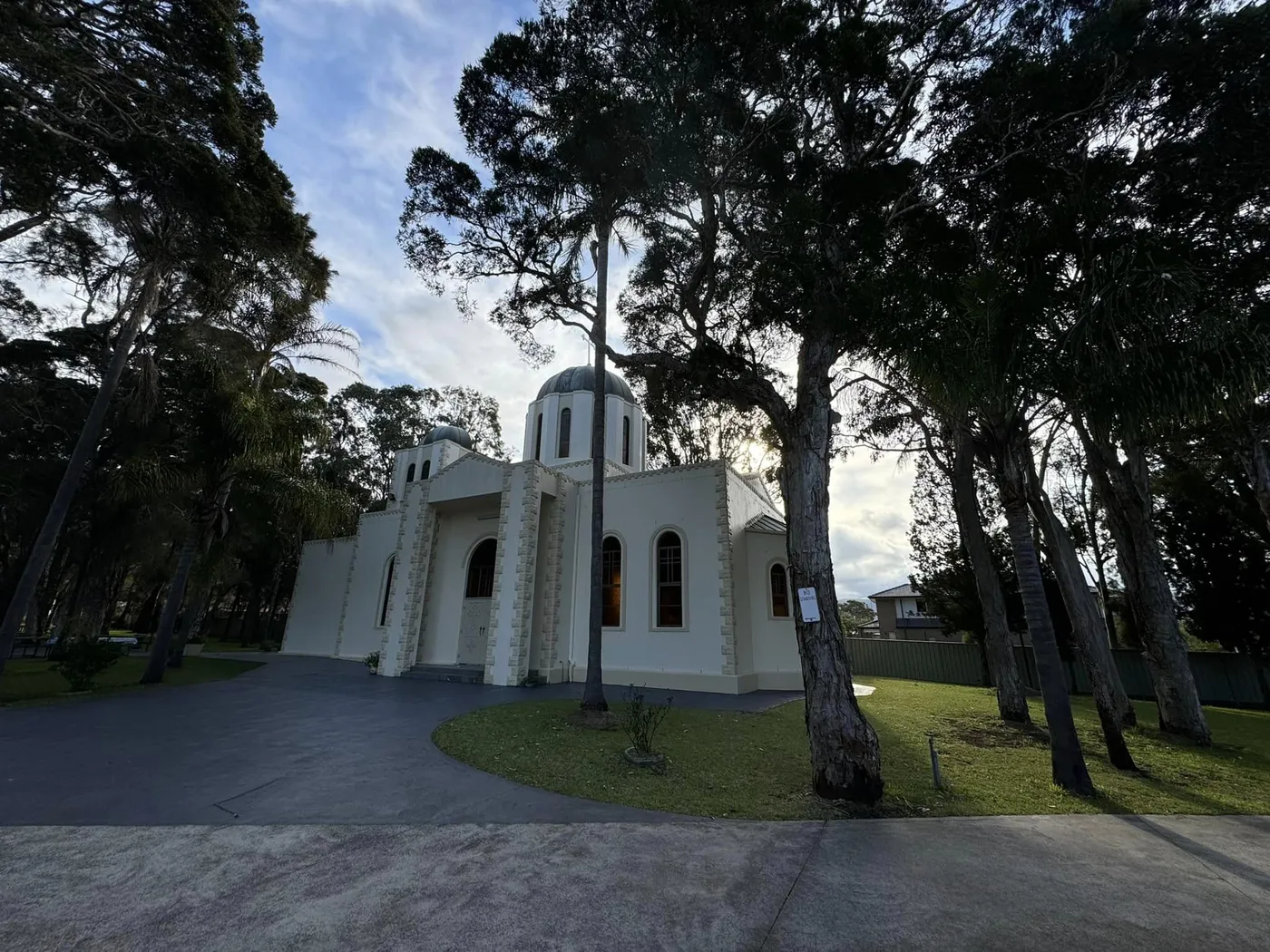
The Serbian Orthodox Church of St John the Baptist stands at 20 Dale Street, Dapto. It is the spiritual home of the Serbian Orthodox community of Wollongong and the Illawarra. This is the story of how a small group of migrants built it, told through the parish's own records and the memories of the people who lived it.
Beginnings, 1960
After the Second World War, many Serbs settled in Wollongong. Like thousands of other migrants to the Illawarra, they came for work: the men mostly at the BHP steelworks at Port Kembla, and many of the women at the Bonds clothing factory. By the late 1940s and through the 1950s there was a growing Serbian community in the city, and with it a wish for a church of its own. For Serbs the Orthodox Church had always been the one constant in a turbulent history, and the community wanted a place where faith, language and tradition could be passed on.
On 27 March 1960 a small group met and founded the Serbian Orthodox Church and School Community of Saint John the Baptist. Dragoljub Stefanović was elected its first president, and the parish was formally established the following year, in 1961.
Early years, the 1960s
For its first years the community had no church of its own. The Very Reverend Dušan Popović travelled from his parish in Canberra once a month to serve the Liturgy, at first in halls rented for the day. The Greek Orthodox community then generously opened its church in Stewart Street, Wollongong, for Serbian liturgies, weddings and baptisms, and for the first time Serbian families in Wollongong could be married and have their children baptised by a Serbian priest in their own city.
Through the 1960s and early 1970s the community grew, and its members put money aside from their pay packets towards land for a church.
Dale Street, 1974 to 1977
On 27 December 1974 Bishop Nikolaj appointed Fr Miroslav Popović to the parish. Like many of his parishioners he also worked at the BHP steelworks, and with the committee he set out to find land.
In April 1976 the community bought 2.5 acres on Dale Street, Dapto, for $48,000. This is the land the church stands on today. It came with a single-storey house of two units: one was turned into a chapel, and Fr Miroslav and his family lived in the other. The chapel was blessed on 28 June 1976, St Vitus Day (Vidovdan). For the first time the Serbian people of Wollongong had their own church on their own land, and families who had saved for it went on to clear the bush around it by hand.
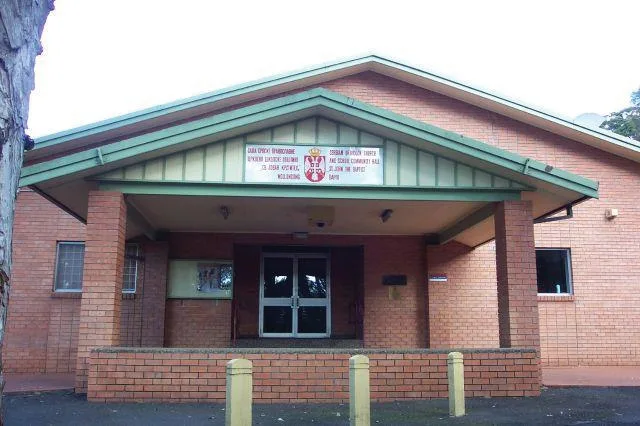
The community built its hall before its church. A hall could be used straight away for services, slavas and celebrations, while a Byzantine-style church would take years and a great deal more money. Digging began in January 1977, and Bishop Nikolaj blessed the foundations a month later with Serbian clergy, a delegation from the Greek Orthodox Church and the Lord Mayor of Wollongong. The hall was blessed on 17 December 1977, less than a year after work began. It cost $60,000 and every hour of labour was given by volunteers. The parish's first folklore group danced at the blessing.
Building the church, 1978 to 1986
In May 1978 a young priest, Fr Ljupko Ćubrilović, came to Dapto, a recent graduate of the Serbian Orthodox seminary in Sremski Karlovci. He had first visited in June 1977. Bishop Nikolaj ordained him on 16 April 1978 in the chapel at Dapto, and two weeks later, at the age of 24, he was given the parish, taking it over from Fr Miroslav on 14 May 1978. One of his first acts was to start a fund to build a church, and the parish backed it at that year's annual meeting. While the church was being built, Fr Ljupko also worked at the BHP steelworks.
On 6 February 1982, at a general meeting in the hall attended by Bishop Vasilije, Fr Ljupko, president Ljubomir Zlojutro and 49 members, the parish decided to build. Bishop Vasilije blessed the foundations on 12 June 1982, with delegations from Serbian churches in Sydney, Rooty Hill, Warriewood and Canberra and the Lord Mayor of Wollongong. The first Divine Liturgy in the new church was served on 20 May 1984 by Fr Milorad Lončar and Fr Ljupko, and on 17 November 1985 the parish marked 25 years of its church community.
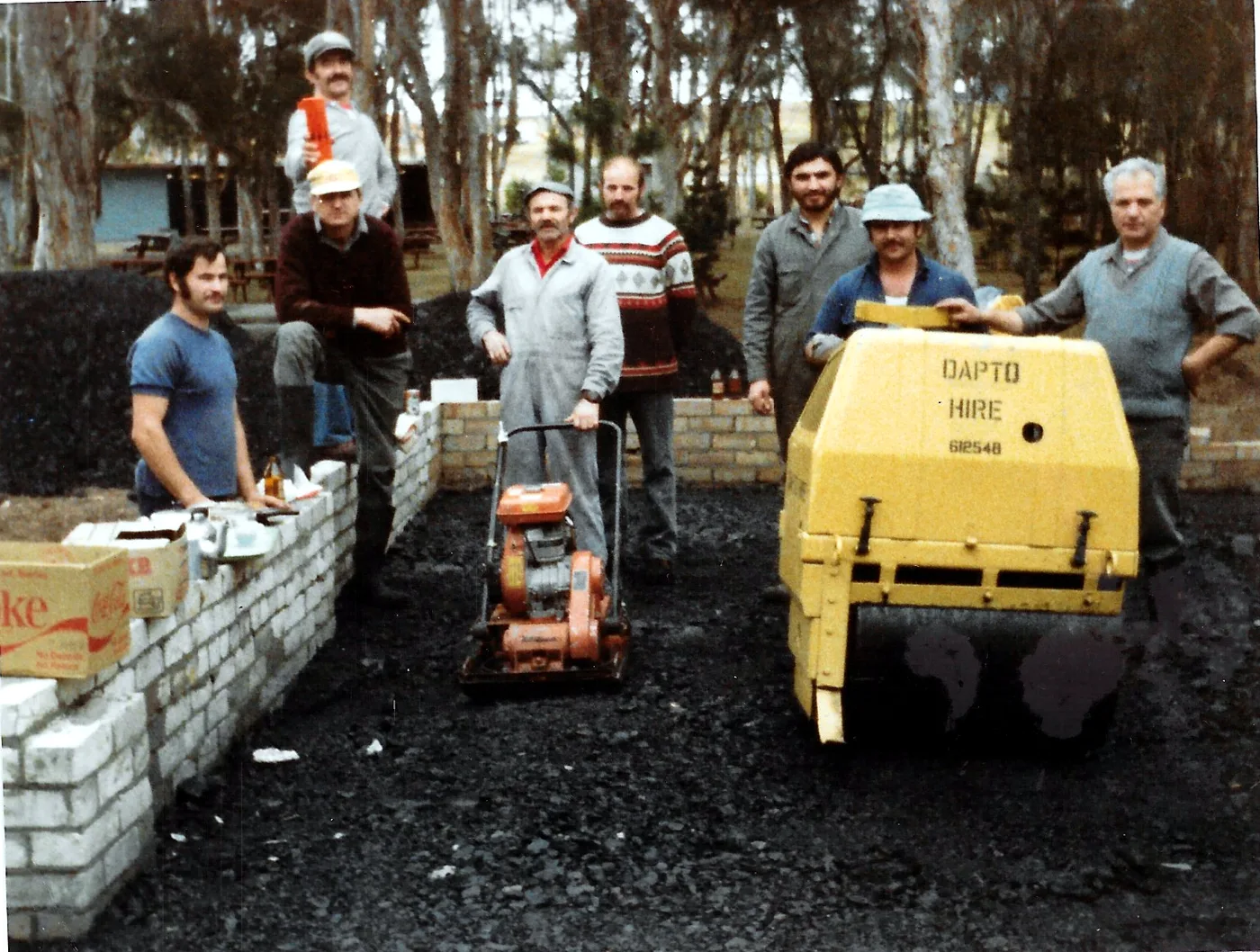
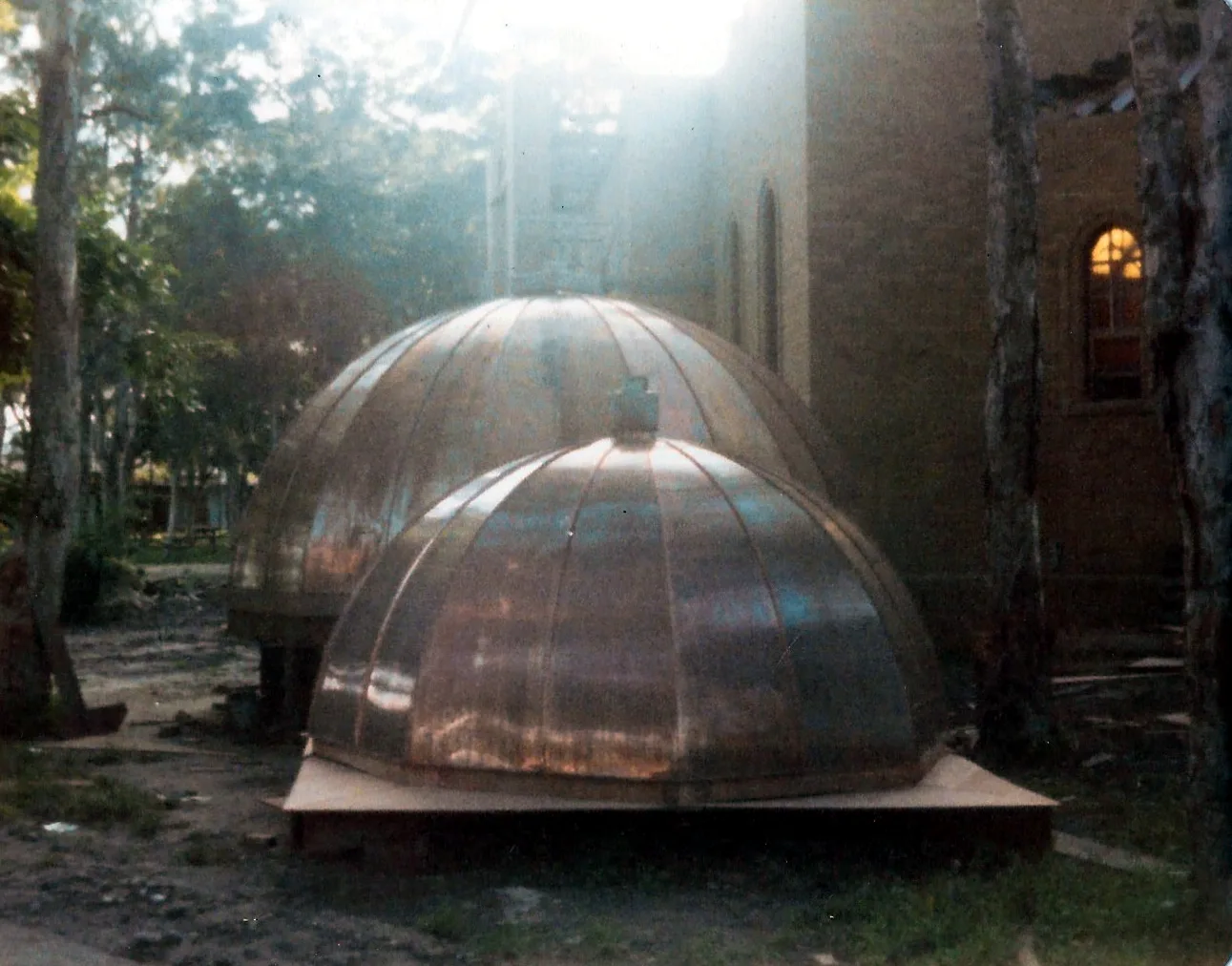
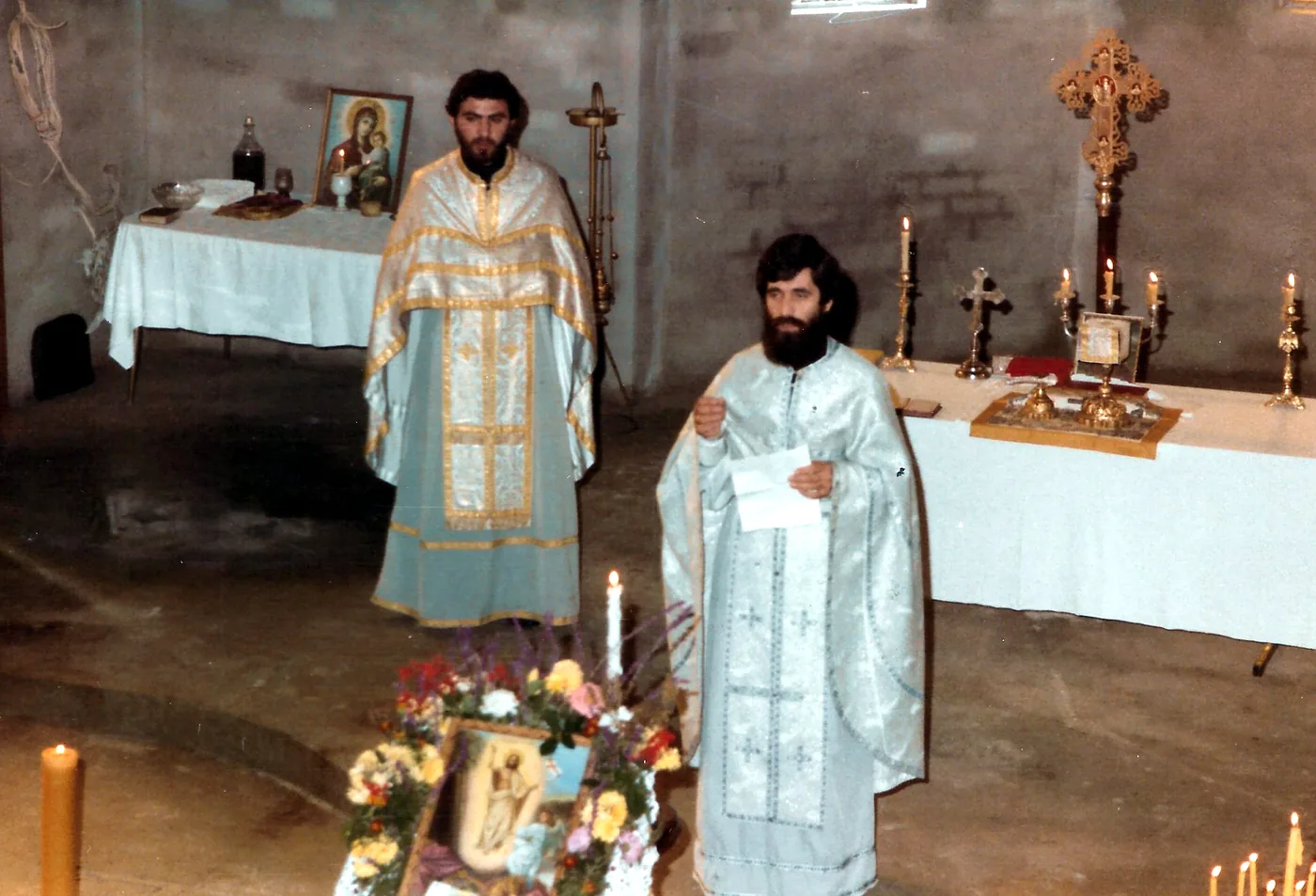
See more photographs in the building the church gallery and the first Liturgy gallery.
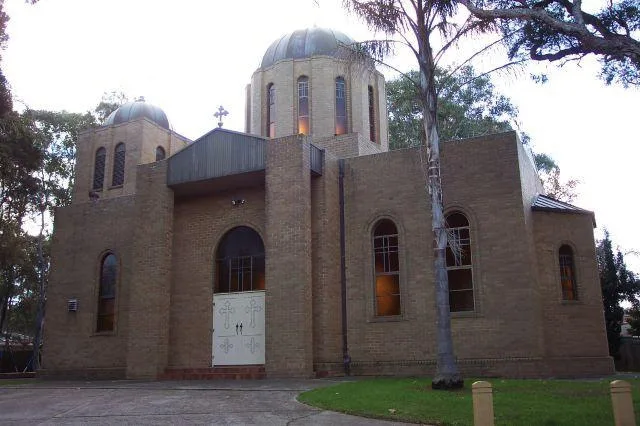
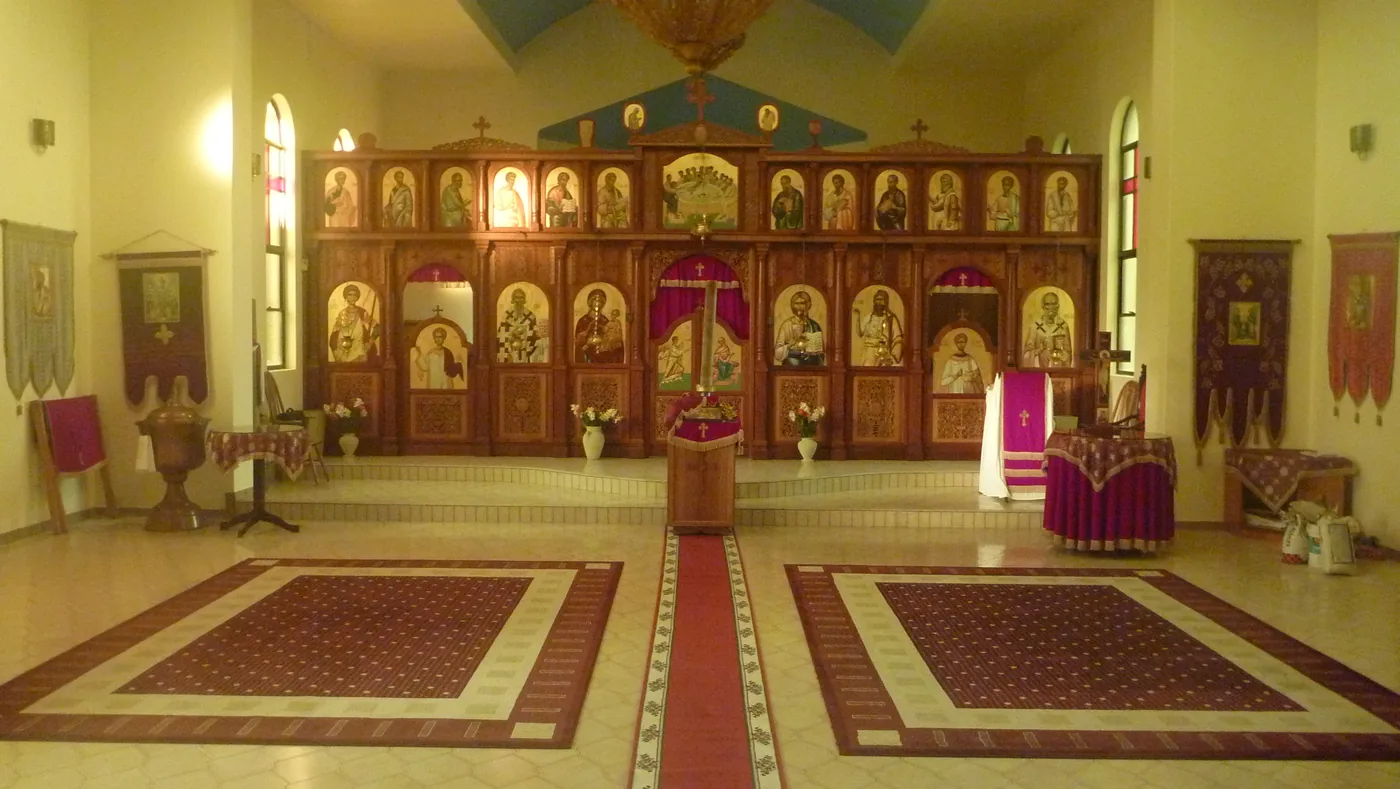
On 5 October 1986 people came from across New South Wales for the consecration of the church by Bishops Nikolaj, Vasilije and Longin. The church was built by volunteers: Savo Ćosić led the construction from start to finish and gave 700 unpaid hours, and Mile Regulić gave 670. The Circle of Serbian Sisters (Kolo srpskih sestara) gave $22,000 for the iconostasis. The names of everyone who gave their time and money are displayed at the church's front entrance.
Mr Boško Tešanović was the kum (godfather) of the church, together with his wife Mara. He was the church's largest individual donor and one of its greatest supporters, and it was he who brought Fr Ljupko to Australia.
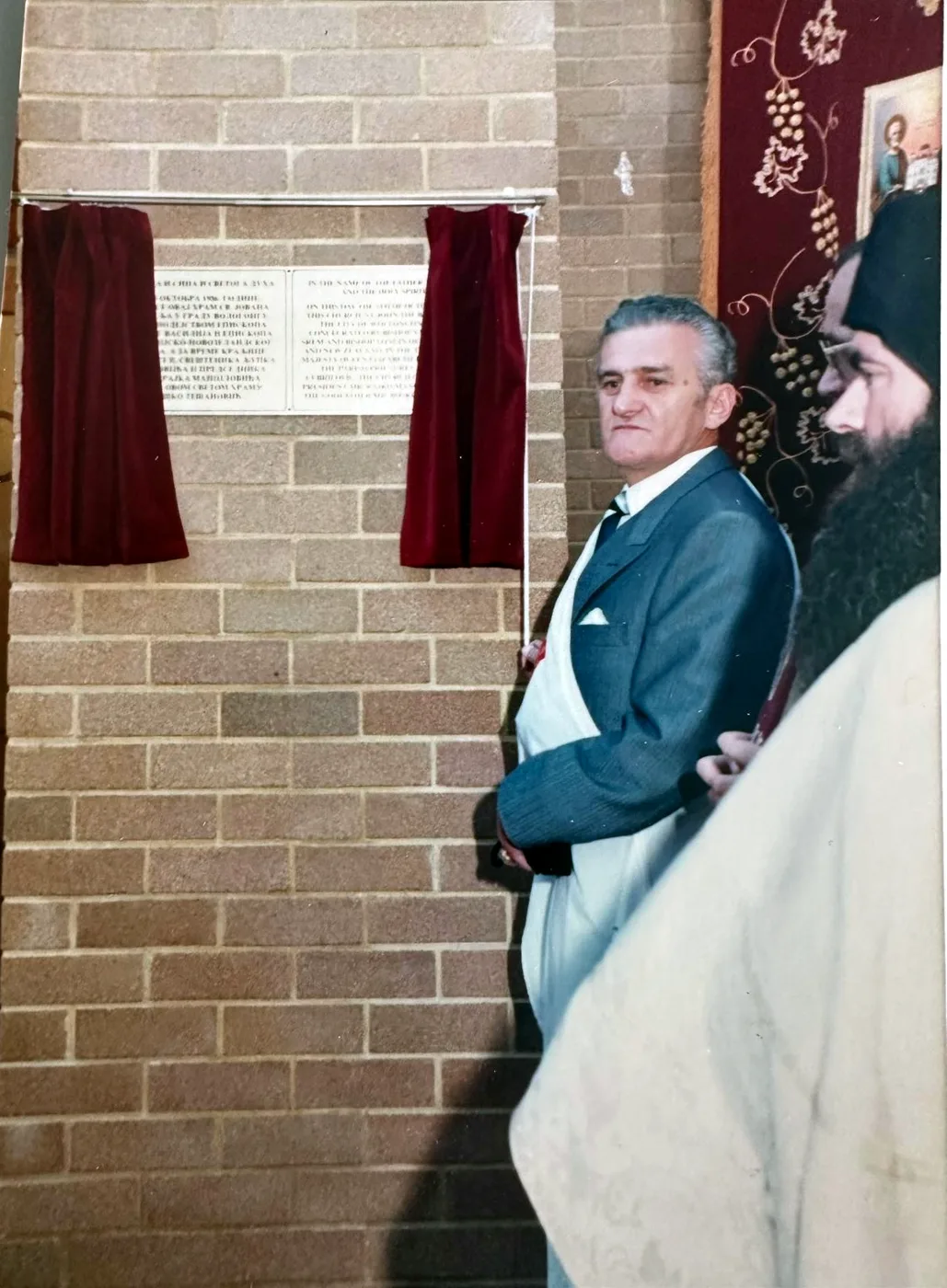
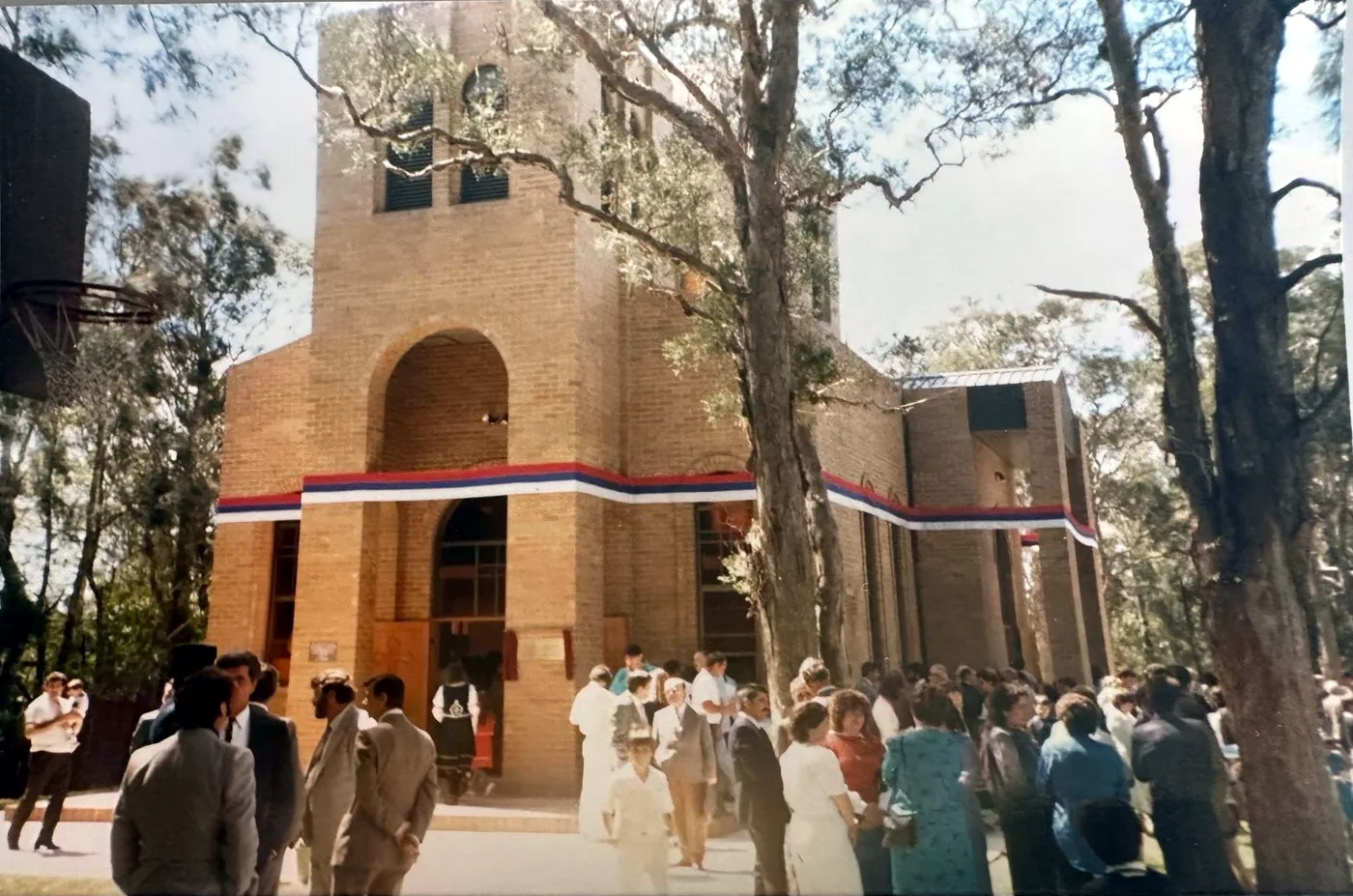
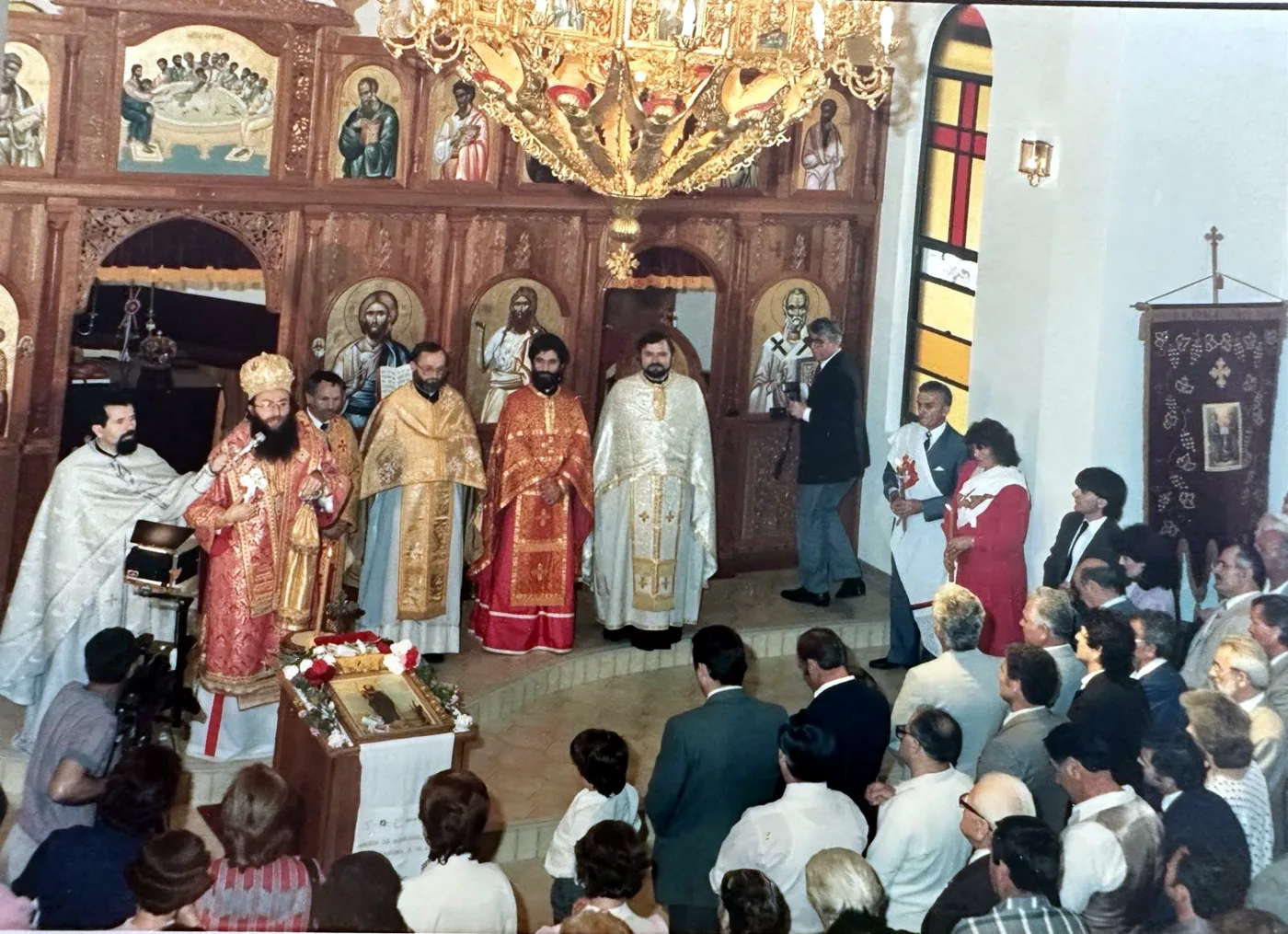
See more photographs in the consecration gallery.
Growing the parish
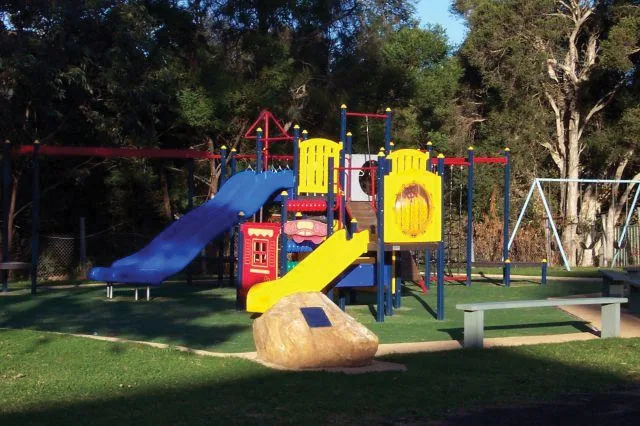
The work did not stop with the consecration. In the years that followed the parish extended the hall and built a school and an office for its welfare work and accommodation. It bought the land next door and built a soccer field and a children's playground there; a fundraising drive led by the parish's women paid for the playground, which opened on 2 February 2004.
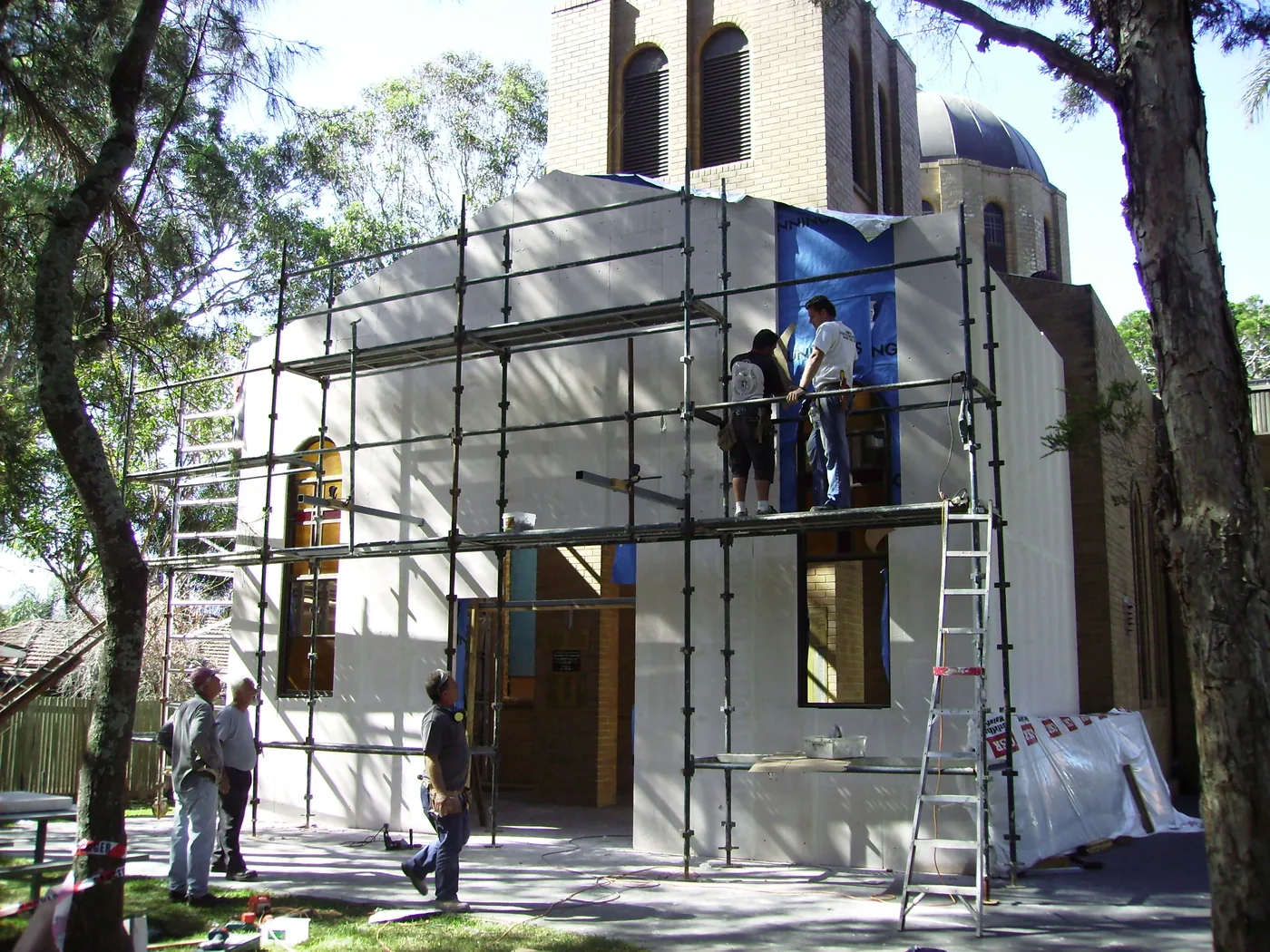
Between 2006 and 2010 the church was extended and the original brick church was rendered. Volunteers worked from scaffolding around the porch, the bell tower and the walls, and the porch was given a new roof. By September 2010 the church stood in the cream render it has today. See the extending and rendering gallery and the church and grounds in 2010.
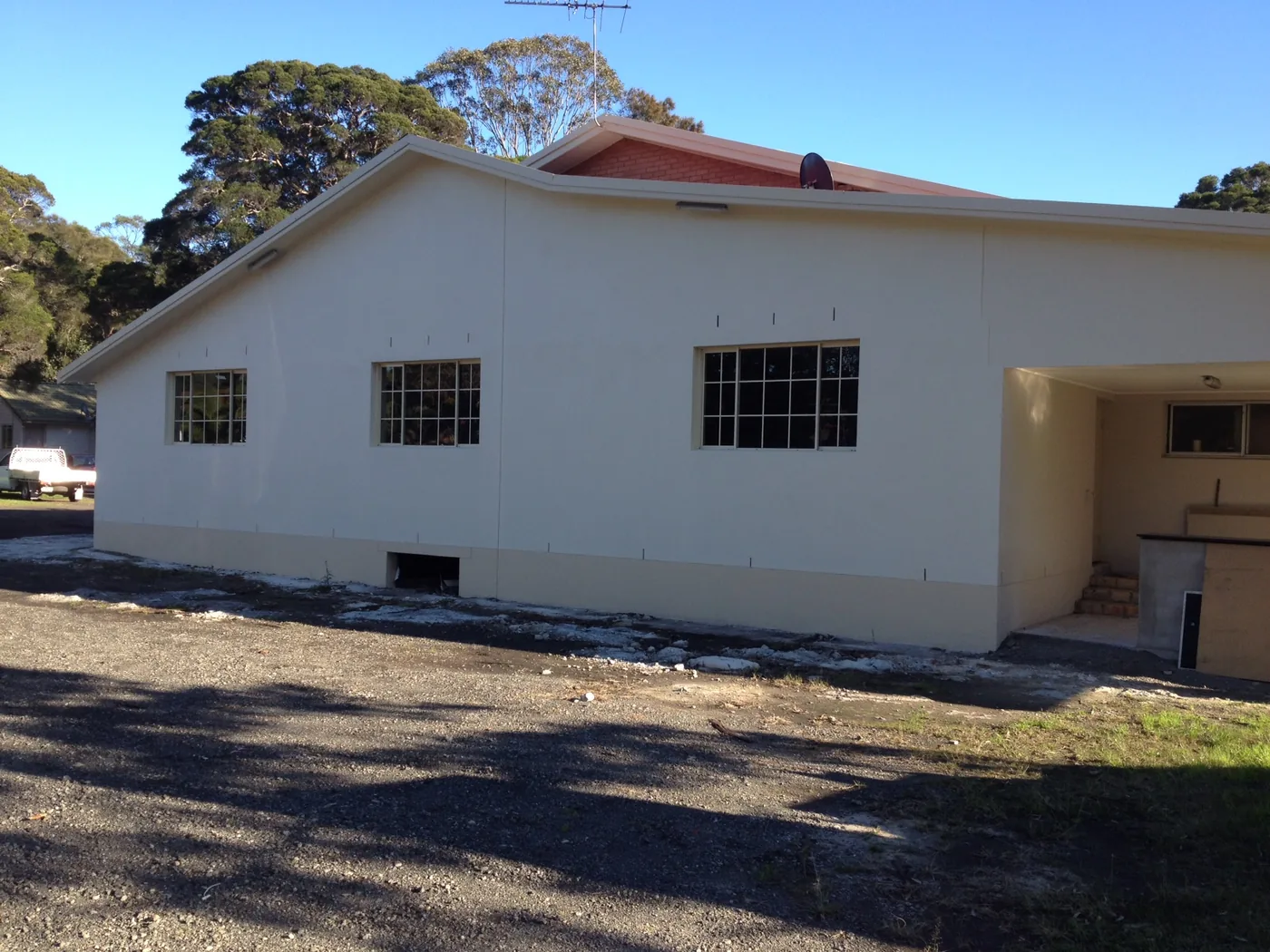
In 2011 and 2012 the hall was extended again, adding change rooms and a new barbecue area at the back. Work on the footings began in August 2011 and the building was finished by mid 2012 (change rooms and barbecue area gallery). In 2017 and 2018 the parish built a small office and a storage shed in the grounds, and the hall was refinished in cream to match the church (office and shed gallery). Most recently, in 2026, the parish refurbished the church extension.
Celebrating the years
On 12 September 2010 the parish celebrated 50 years of its church community, with the Liturgy in the church and a celebration in the hall beneath a large "50" banner, with folklore by the parish's children (50 years gallery).
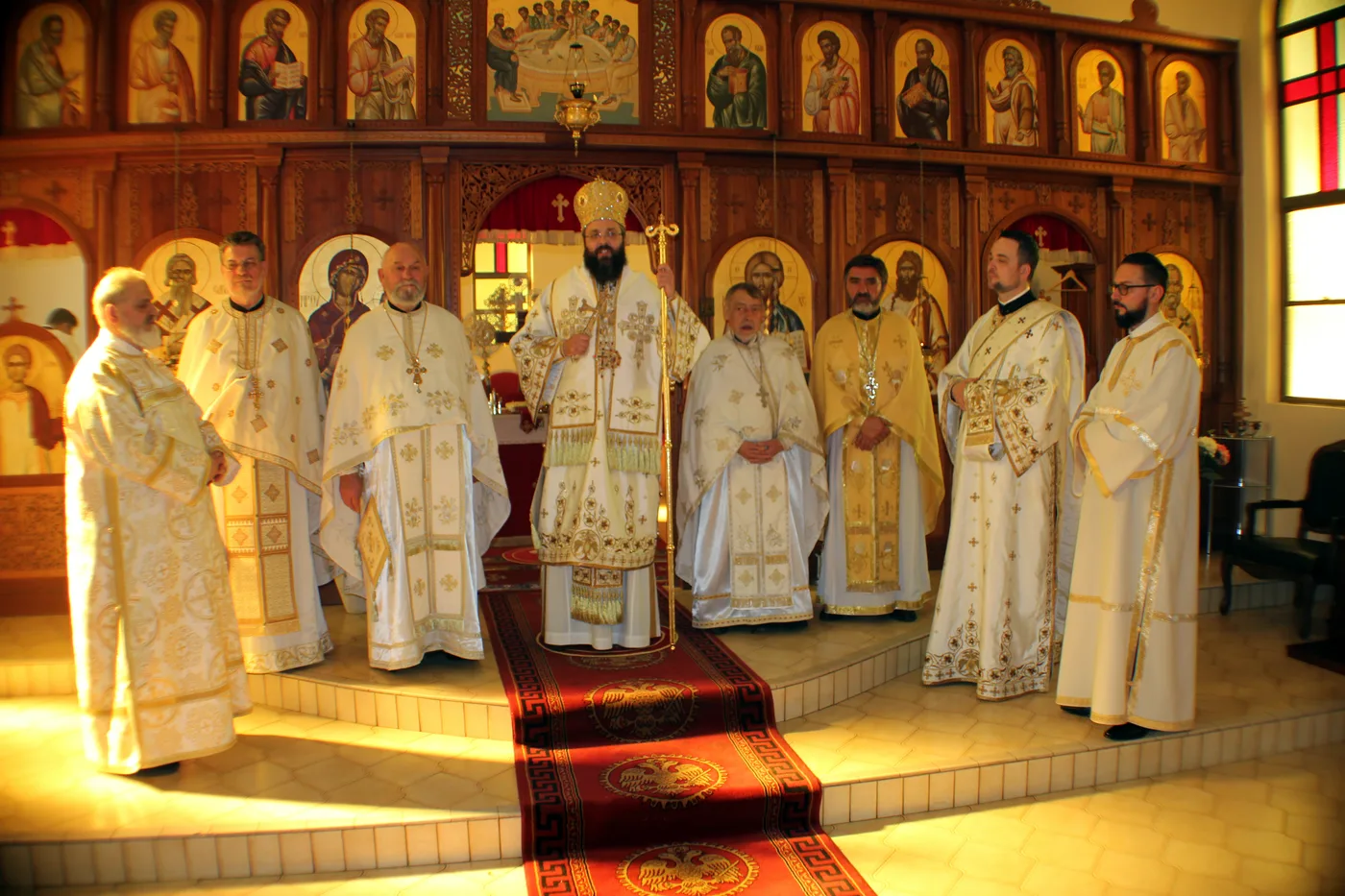
On 22 July 2018 the parish marked Fr Ljupko Ćubrilović's 40 years of service with a hierarchical Divine Liturgy and a lunch in the hall, with speeches, gifts, the choir and a "40" cake (Fr Ljupko's 40 years gallery).
The parish today
Sunday Divine Liturgy is usually at 9 am, and the church calendar lists services and feast days. The Circle of Serbian Sisters and the folklore group Ravna Gora, which marked 30 years in 2005, remain at the heart of parish life. Every Friday evening from 6:30 pm the hall hosts folklore, Serbian language and religious education, and every Tuesday the pensioners' group meets there. The parish priest is Fr Nikola Kovačević.
Forty years on
Forty years after its consecration, the parish's next project is to paint frescoes inside the church, and it will be asking for the community's support. As the anniversary speech puts it, the hope is to keep building and caring for this place, with the same faith, generosity and community spirit, for the generations to come.
Timeline
- Late 1940s to 1950s: Serbian migrants settle in Wollongong, many working at the BHP steelworks and the Bonds clothing factory.
- 27 March 1960: the Serbian Orthodox Church and School Community of Saint John the Baptist is founded; Dragoljub Stefanović is the first president.
- 1961: the parish is formally established.
- 1960s: liturgies in rented halls, then at the Greek Orthodox church in Stewart Street, served monthly by Fr Dušan Popović from Canberra.
- 27 December 1974: Bishop Nikolaj appoints Fr Miroslav Popović to the parish.
- April 1976: 2.5 acres on Dale Street, Dapto, bought for $48,000.
- 28 June 1976: the chapel is blessed, on St Vitus Day (Vidovdan).
- January 1977: work begins on the hall.
- February 1977: the foundations of the hall are blessed.
- 17 December 1977: the hall is blessed; it cost $60,000, all labour volunteered.
- 16 April 1978: Fr Ljupko Ćubrilović is ordained in the chapel at Dapto.
- 14 May 1978: Fr Ljupko takes over the parish and starts the church building fund.
- 6 February 1982: the parish decides to build the church; Ljubomir Zlojutro is president.
- 12 June 1982: the foundations of the church are blessed.
- 20 May 1984: the first Divine Liturgy in the new church.
- 17 November 1985: 25 years of the church community.
- 5 October 1986: the church is consecrated by Bishops Nikolaj, Vasilije and Longin.
- After 1986: the hall is extended; a school, a welfare and accommodation office and a soccer field are built.
- 2 February 2004: the children's playground opens on the land next door.
- 2006 to 2010: the church is extended and rendered.
- 12 September 2010: 50 years of the church community.
- August 2011 to 2012: change rooms and a barbecue area are added to the hall.
- 2017 to 2018: a small office and a storage shed are built; the hall is refinished in cream.
- 22 July 2018: Fr Ljupko's 40 years of service.
- 2026: the church extension is refurbished.
- 15 November 2026: 40 years since the consecration and 65 years since the parish was established. See the anniversary event.
Last updated